Module 2: Holding & Posture
Building the Frame
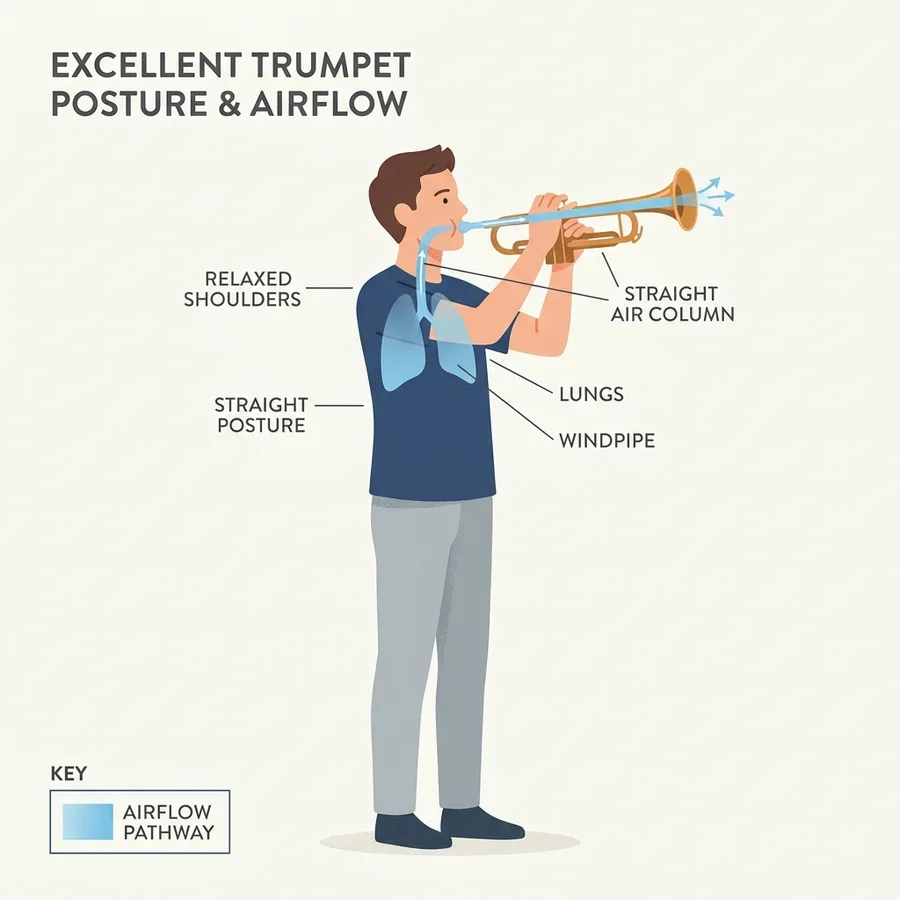
Trumpet playing is an athletic activity. You cannot fire a cannon from a canoe. You need a stable platform, and that platform is your body geometry.
The Air Column: Your throat, windpipe, and lungs must essentially form a straight line. Slouching puts a kink in the hose, forcing you to work twice as hard for half the sound. Lift your sternum (chest bone) towards the ceiling.
The Left Hand: The Vice Grip
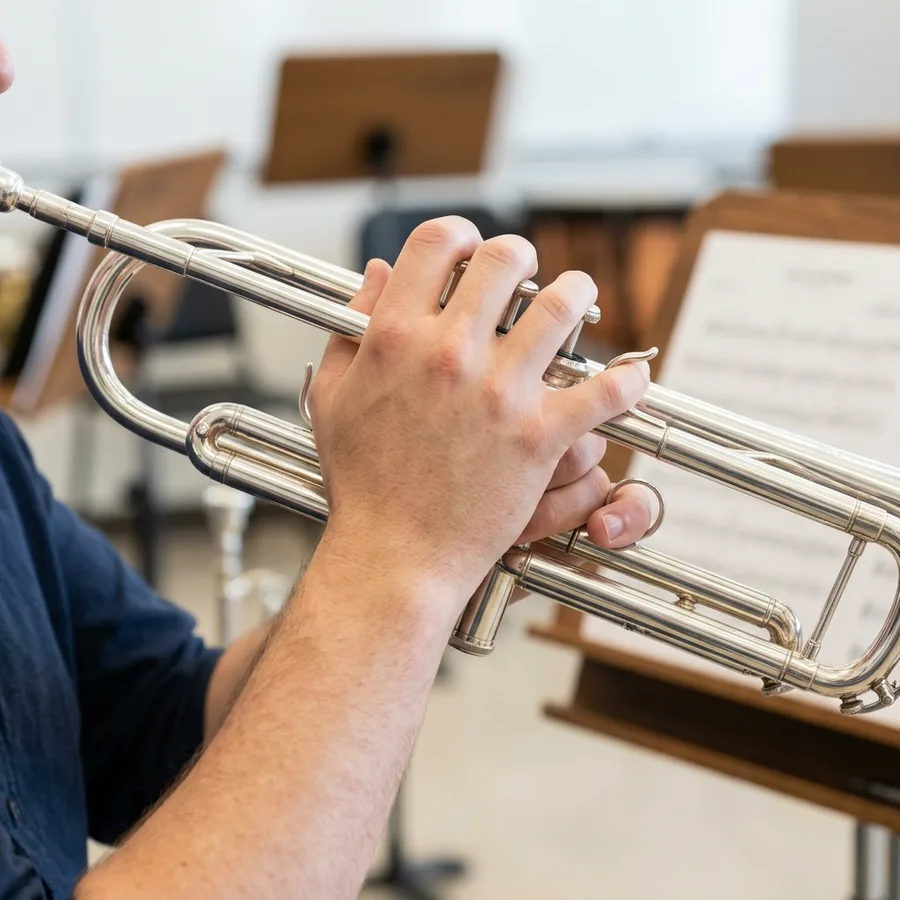
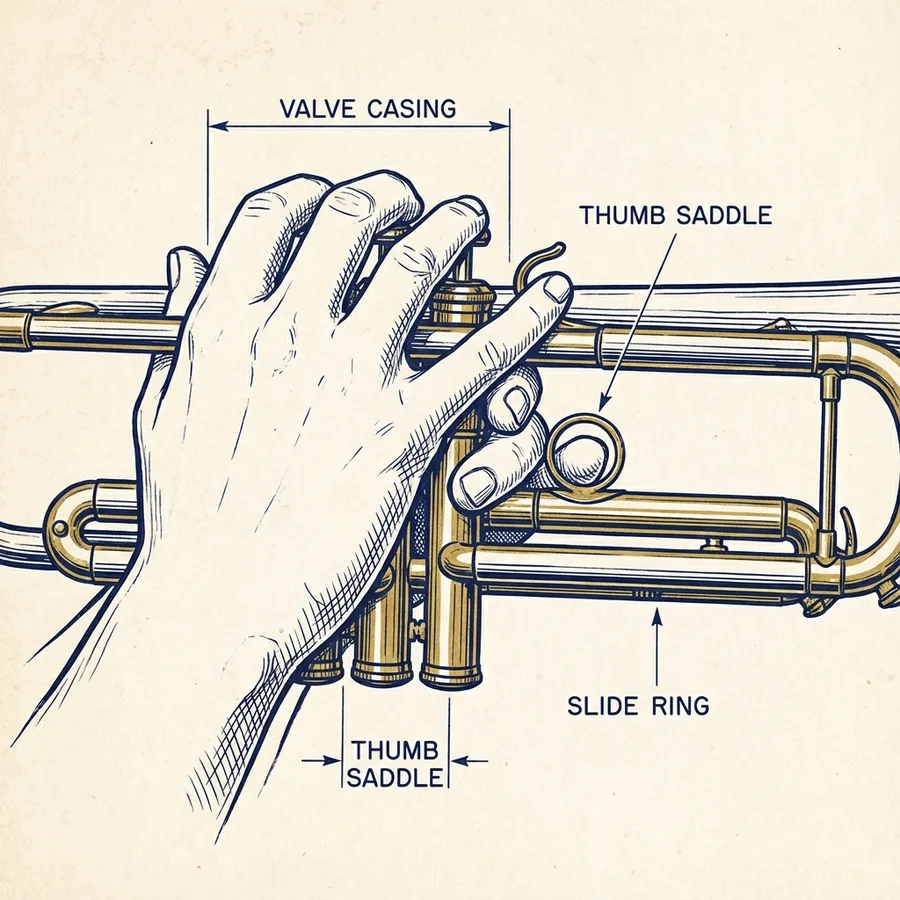
The Left Hand is the boss. It does 100% of the holding work. It must be secure so the Right Hand can float freely.
- Thumb: Insert into the thumb saddle (if you have one) or wrap around the valve casing.
- Ring Finger: Through the 3rd valve ring. This is crucial later for tuning low D and C#.
- Grip Strength: Hold it firm enough that someone couldn't easily snatch it from you, but not white-knuckled.
The Right Hand: The Pianist
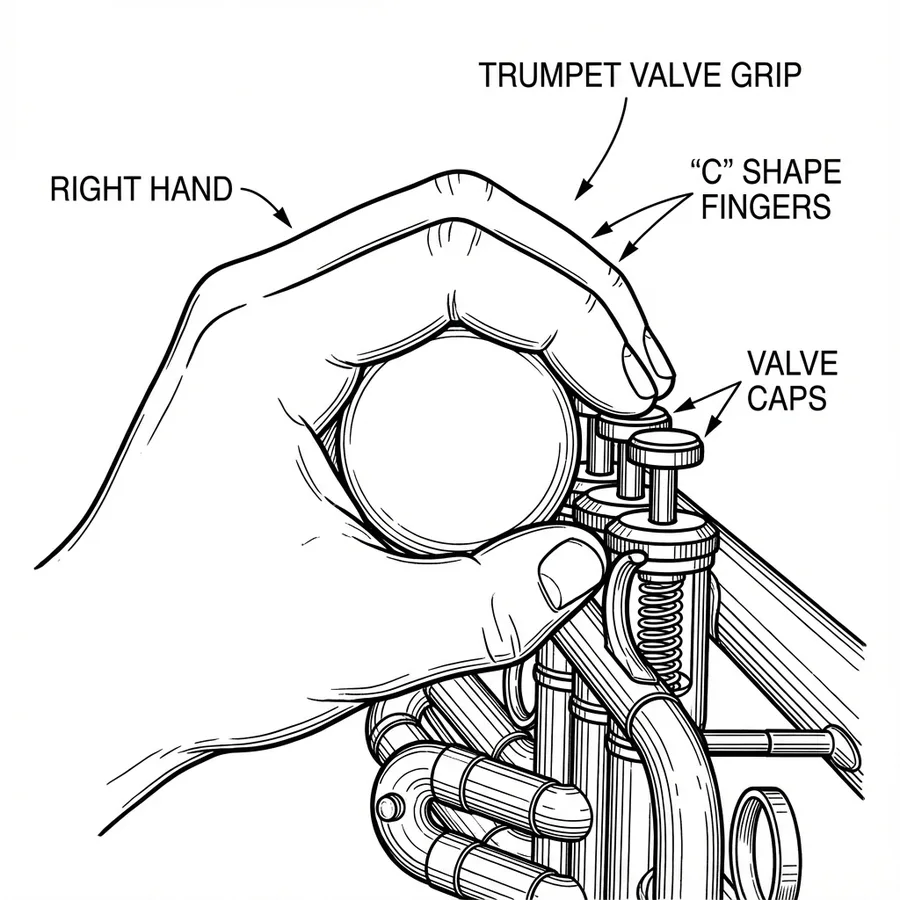
Your Right Hand is for dexterity only. Imagine you are holding a tennis ball or an orange. Your fingers should be curved in a 'C' shape.
Why Curved? The valves move vertically. If your fingers are flat, you push them diagonally, which grinds the piston against the casing, causing slow valves. Striking from above ensures speed and precision.
The Pinky Trap (Danger!)
The most common beginner mistake is hooking the Right Pinky into the finger hook. STOP!
The pinky hook is only for holding the trumpet with one hand while turning pages. While playing, your pinky should rest ON TOP of the ring.
Anatomy Fact: The ring finger and pinky share a flexor tendon. If you anchor your pinky, you physically restrict your ring finger (3rd valve), making your technique clumsy and slow.