Module 5: Tonguing Mechanics
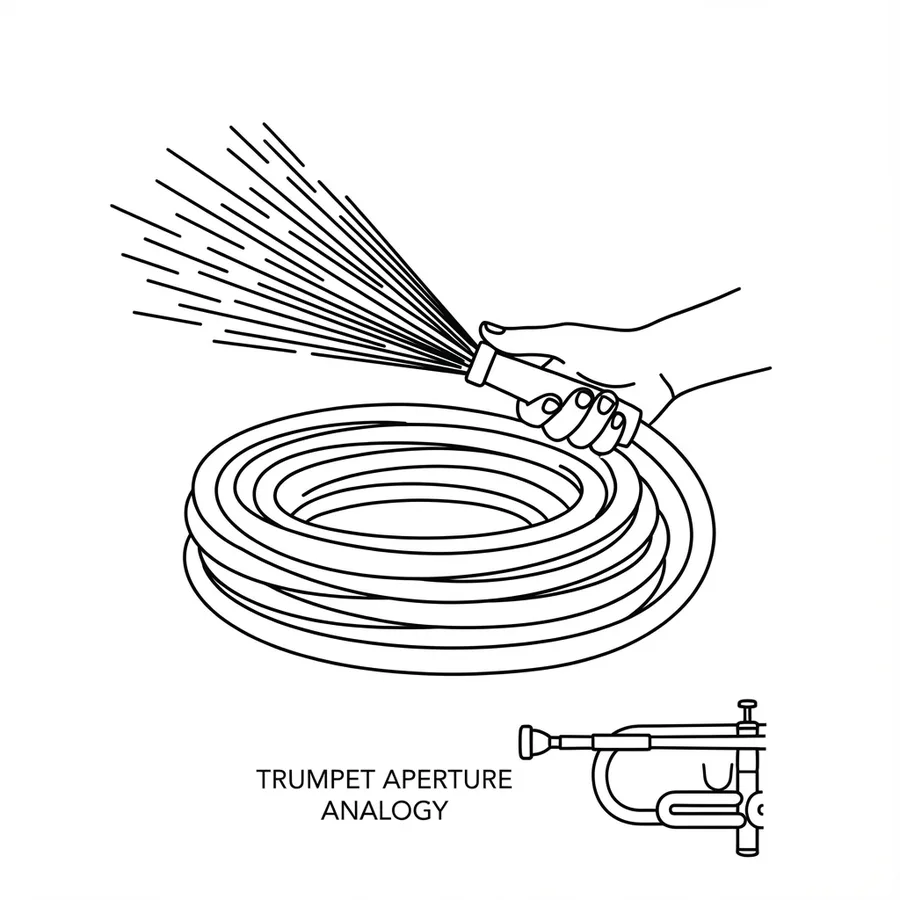
The Faucet Metaphor
Beginners think the tongue creates the note. False. The Air creates the note. The tongue just slices it.
Think of your air stream like a garden hose turned on full blast. Your tongue is a knife that quickly chops through the water stream. The water (air) never stops pushing; the knife just interrupts it momentarily.
The 'Tu' Syllable
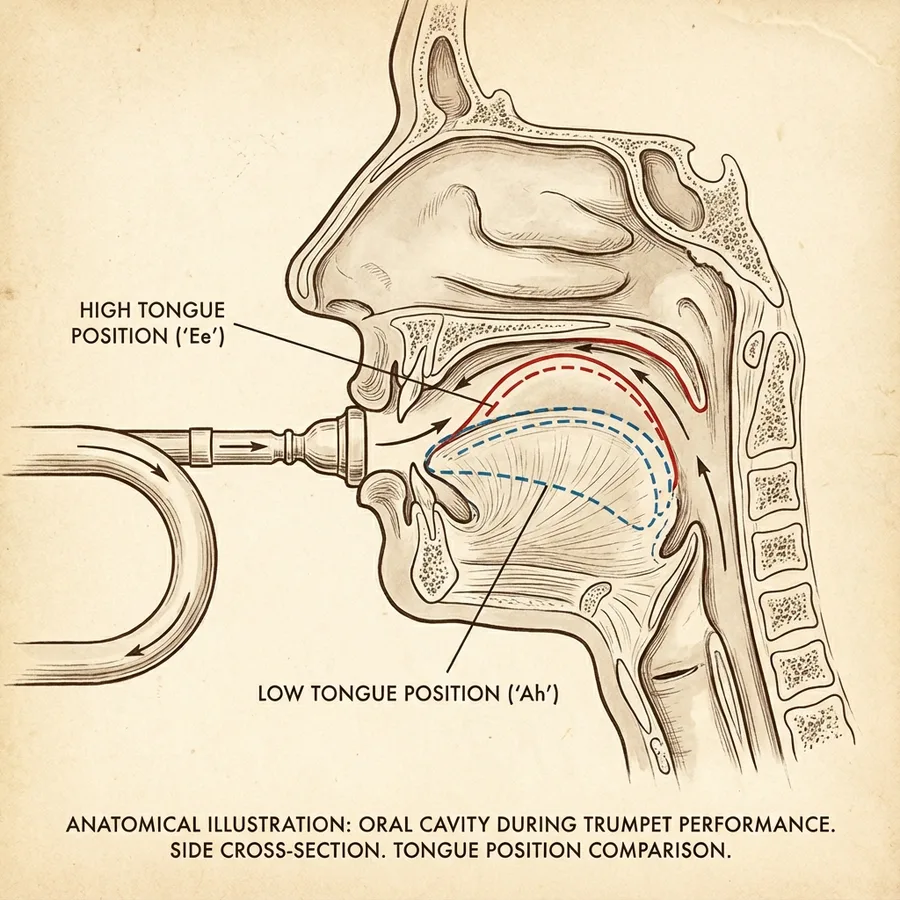
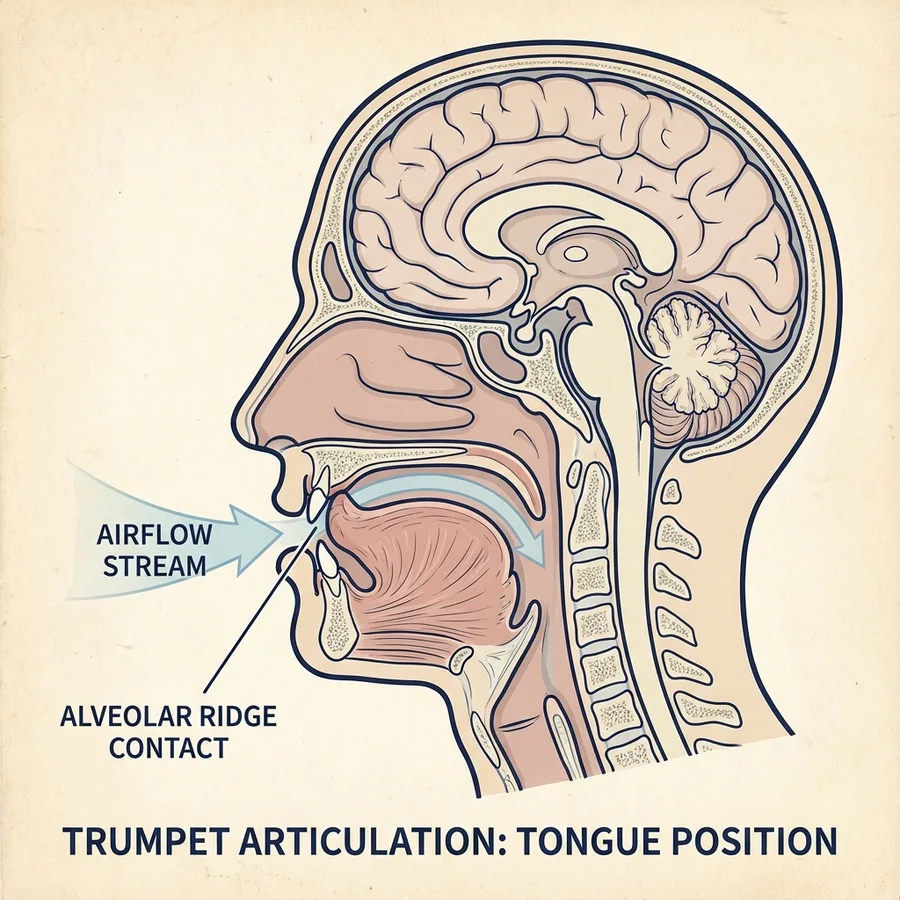
Say the syllable 'Tu' (or 'Too'). Freeze. Where is your tongue?
The tip of your tongue should strike firmly where the back of your top teeth meets the gum line. It should NOT go between the teeth (that is 'Thoo' and it sounds fluffy).
- Hard Attack: 'Too'
- Soft Attack: 'Doo'
- No Attack: 'Hoo' (Breath attack)
The Spitting Seeds Analogy
Imagine a tiny watermelon seed on the very tip of your tongue. You want to shoot it across the room into a trash can.
You build up air pressure behind the tongue blockage, then release it instantly. POW! That pop is the clean articulation we desire.
Styles: Staccato vs Legato
Legato (Tenuto): Think of a violin bow changing direction smoothly. The notes touch each other. 'Dah-Dah-Dah'. Use a 'D' syllable.
Staccato: Separated notes with silence between them. Think of light, crisp syllables: 'Too... Too... Too...' (or 'Tah... Tah... Tah...'). Keep the air moving and simply leave space between the notes — do NOT stop each note by jamming the tongue back against the teeth, which chokes the tone and tightens the throat. Note: Staccato does not mean 'accented', it just means 'short'.