Module 21: The Physics of High Range
The Wedge Breath
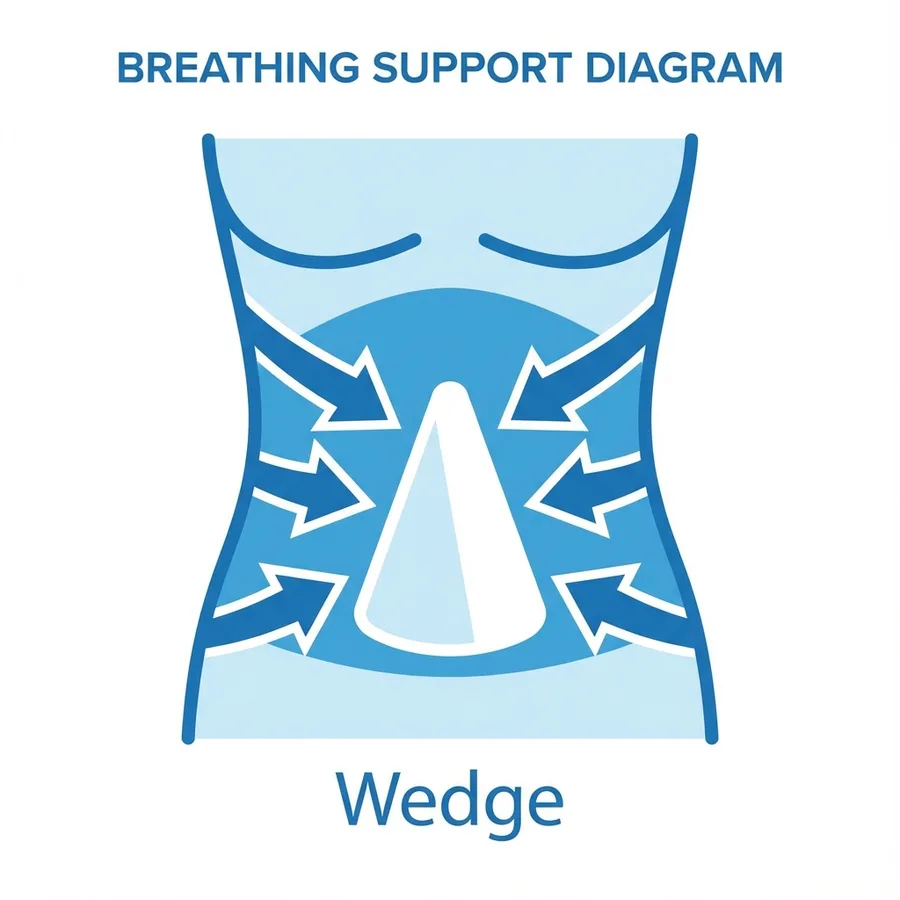
High notes require immense air compression (Pascal's Law). The compression must come from the body, not the face.
The Wedge: Breathe deeply into your lower back. As you ascend, compress your abdominal muscles inward and upward. Imagine you are squeezing a tube of toothpaste from the bottom up. This pressure creates the velocity needed for high frequencies.
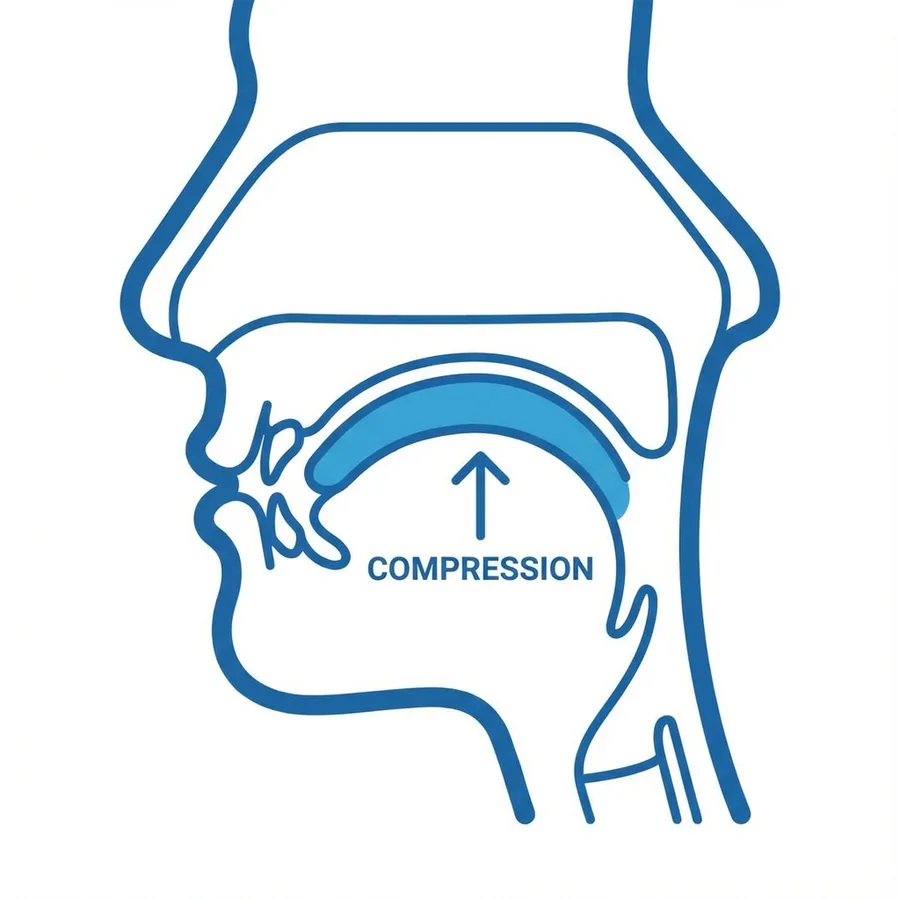
Tongue Arch Compression
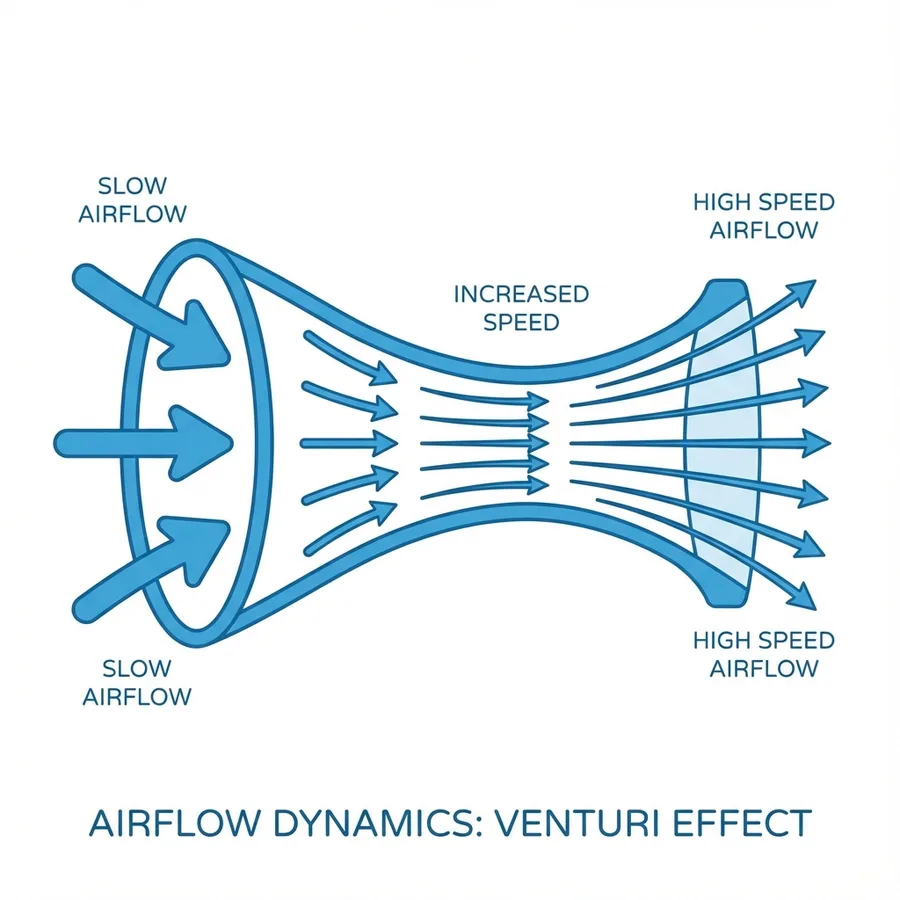
To play high, you must speed up the air. Raise the back of your tongue (the 'Ee' vowel) to narrow the oral cavity. This creates a Venturi effect, accelerating the air stream before it hits the lips.
Analogy: Putting your thumb over a garden hose nozzle. Same amount of water + Smaller hole = Faster spray.
The Aperture Tunnel
At high frequencies, the aperture must be tiny but NOT pinched. Visualize a tunnel that gets longer, not tighter. Pucker slightly forward to cushion the vibration. If you smile/pull back, you thin out the lips and the sound dies.
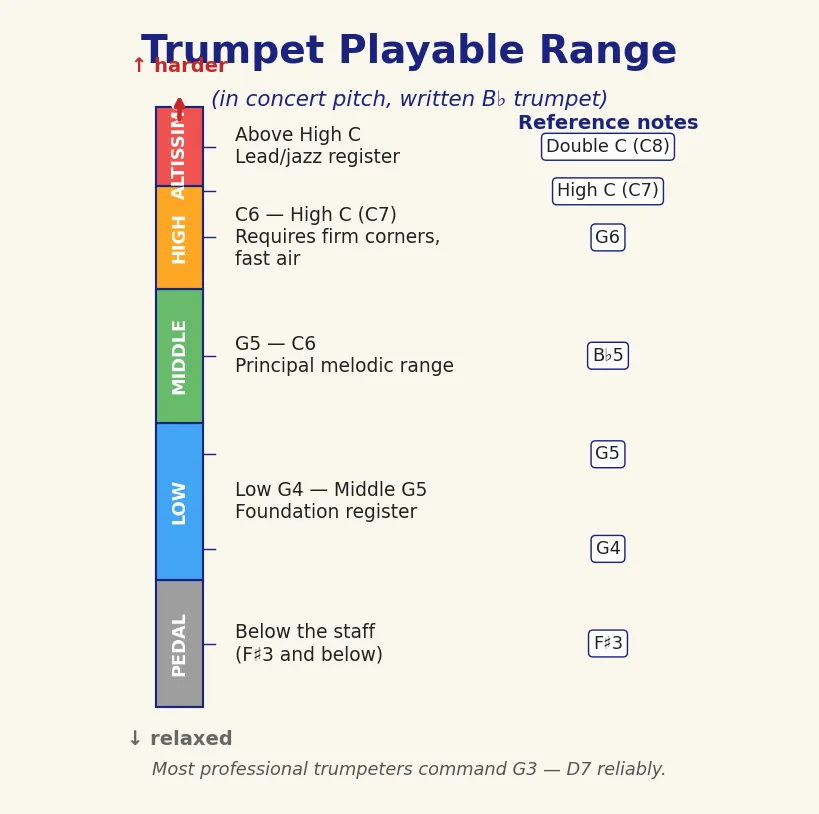
Range Chart
Understand the Vowel Break points:
- Low C - Middle C: 'Ah' (Open)
- Middle C - High G: 'Oo' (Focused)
- High G - Double High C: 'Ee' (Compressed)