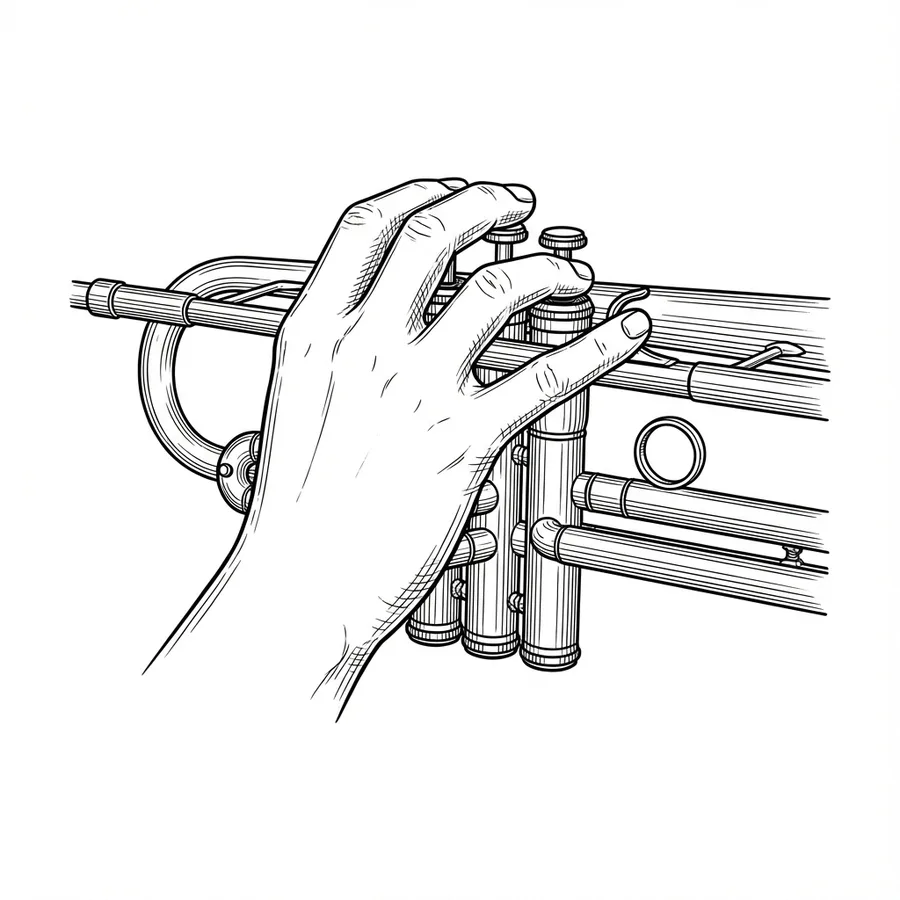
Module 6: The Mechanics (Valves)
The Machine
The trumpet is a tube of fixed length. To play more than a few notes (the harmonic series), we must change the length of the tube instantly.
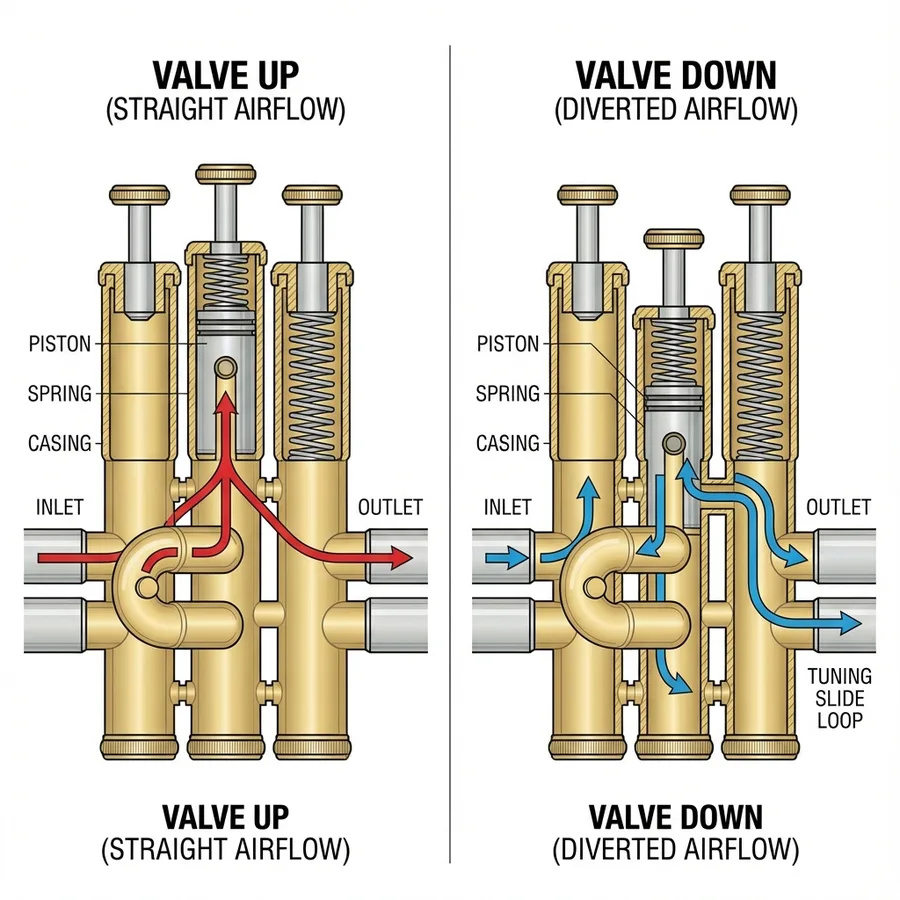
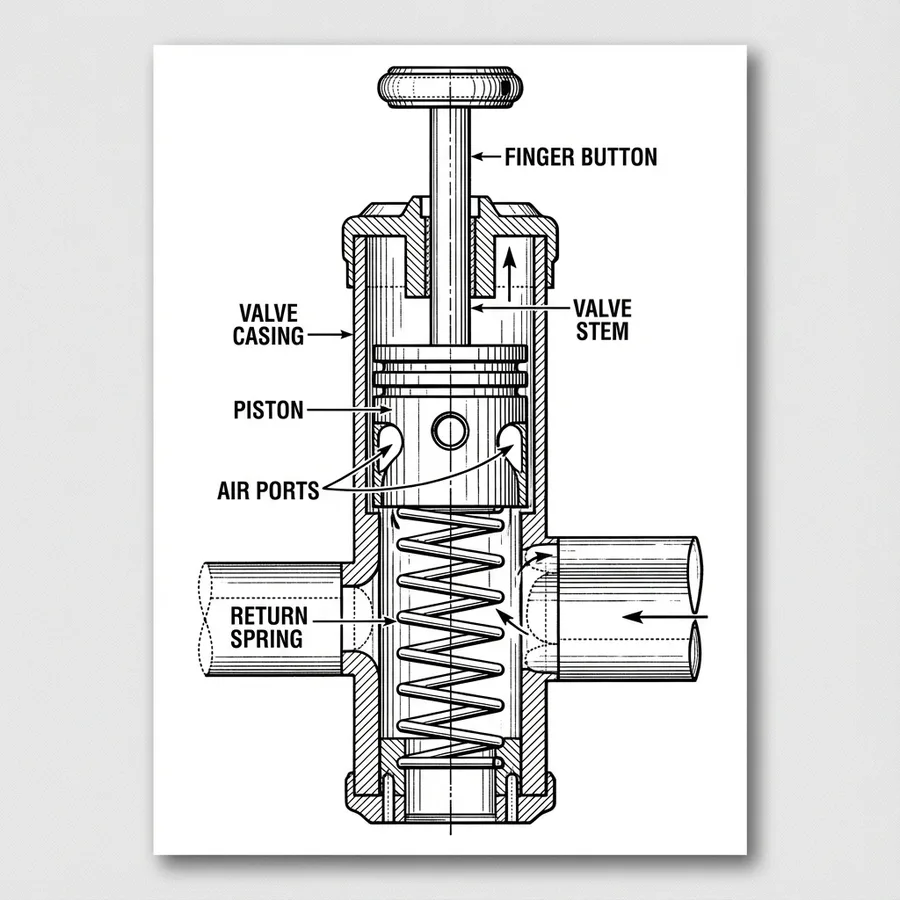
How it works: When you push a valve down, the air is diverted through an extra loop of tubing, lowering the pitch.
Air Travel Logistics
Imagine the air traveling in a straight line. Push a valve, and the road gets longer. Longer road = Lower Sound.
- 2nd Valve (Middle): Adds ~3 inches. Lowers 1/2 step.
- 1st Valve (Index): Adds ~6 inches. Lowers 1 step.
- 3rd Valve (Ring): Adds ~9 inches. Lowers 1.5 steps.
Math Check: 1+2 = 3. Pressing the 1st and 2nd valves adds 9 inches (6+3), which is the same length as the 3rd valve. That's why 1+2 = 3 in trumpet math.
Basic Combinations
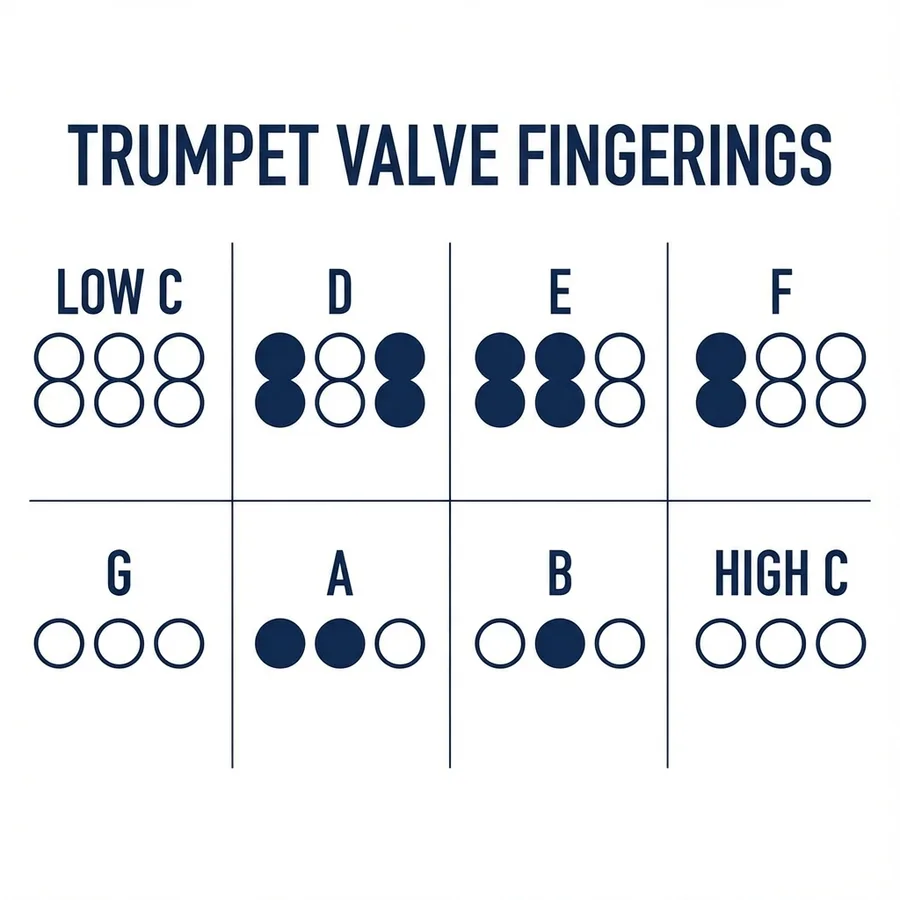
We combine valves to fill the gaps between the open notes of the harmonic series. Here is the key: the chromatic fingerings between Low C and second-line G are NOT built upward from Low C — they descend from the open G (G4). That keeps the "longer tube = lower pitch" rule intact.
Start on open G and add tubing to drop step by step: F# (2), F (1), E (1+2), Eb (2+3), D (1+3), C# (1+2+3). The lower you go, the more tubing you add — which is why C# needs all three valves (the longest tube). The Low C just below it is open again, the start of a new harmonic.
C: Open (0)
C#: 1 + 2 + 3 (All buttons down - the longest tube possible)
D: 1 + 3
Eb: 2 + 3
E: 1 + 2
Technique: The Hammer Strike
Do not be lazy. If you press the valve slowly, the air gets 'confused' halfway down, creating a smearing sound. We want digital perfection.
Slam the valve down like a hammer. It should be 100% up or 100% down. Spend as little time as possible in the 'in-between' zone.